Your During winter sunlight strikes earth at a images are available in this site. During winter sunlight strikes earth at a are a topic that is being searched for and liked by netizens today. You can Get the During winter sunlight strikes earth at a files here. Get all free photos.
If you’re searching for during winter sunlight strikes earth at a images information linked to the during winter sunlight strikes earth at a keyword, you have pay a visit to the ideal site. Our website always provides you with suggestions for seeing the maximum quality video and image content, please kindly search and locate more enlightening video content and graphics that match your interests.
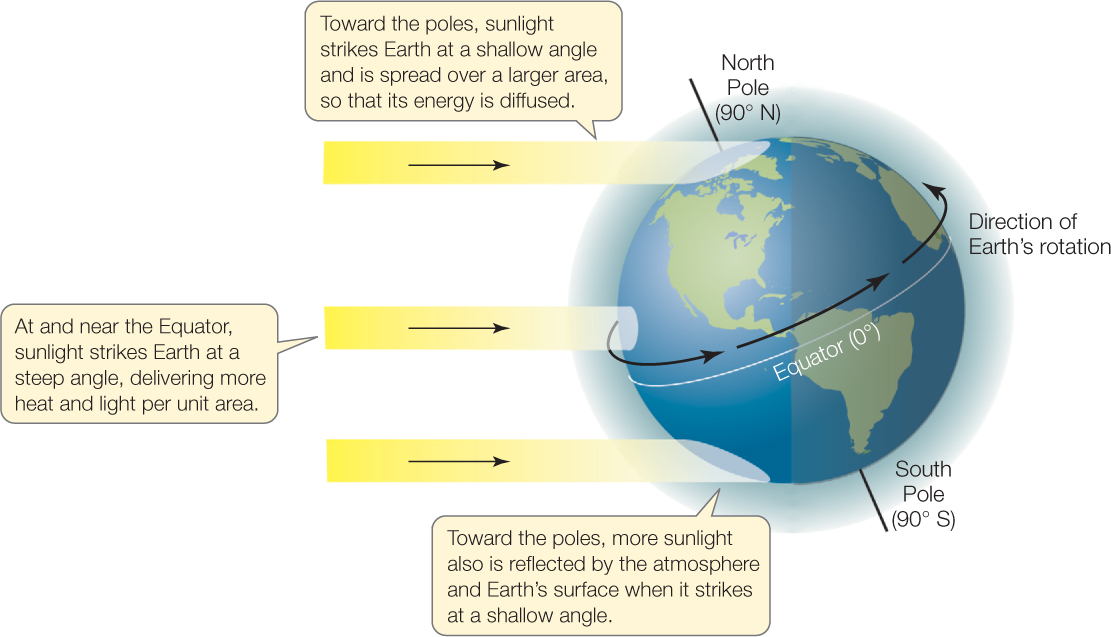
During Winter Sunlight Strikes Earth At A. Sunlight keeps harmful bacteria from taking over aquatic ecosystems. During the winter solstice the Sun shines most. The hemisphere pointed toward the Sun receives direct sunlight. When the suns position is higher in the sky at noon there are more hours of daylight and the sunlight strikes the surface at a more vertical angle.
 Hillis2e Ch41 From macmillanhighered.com
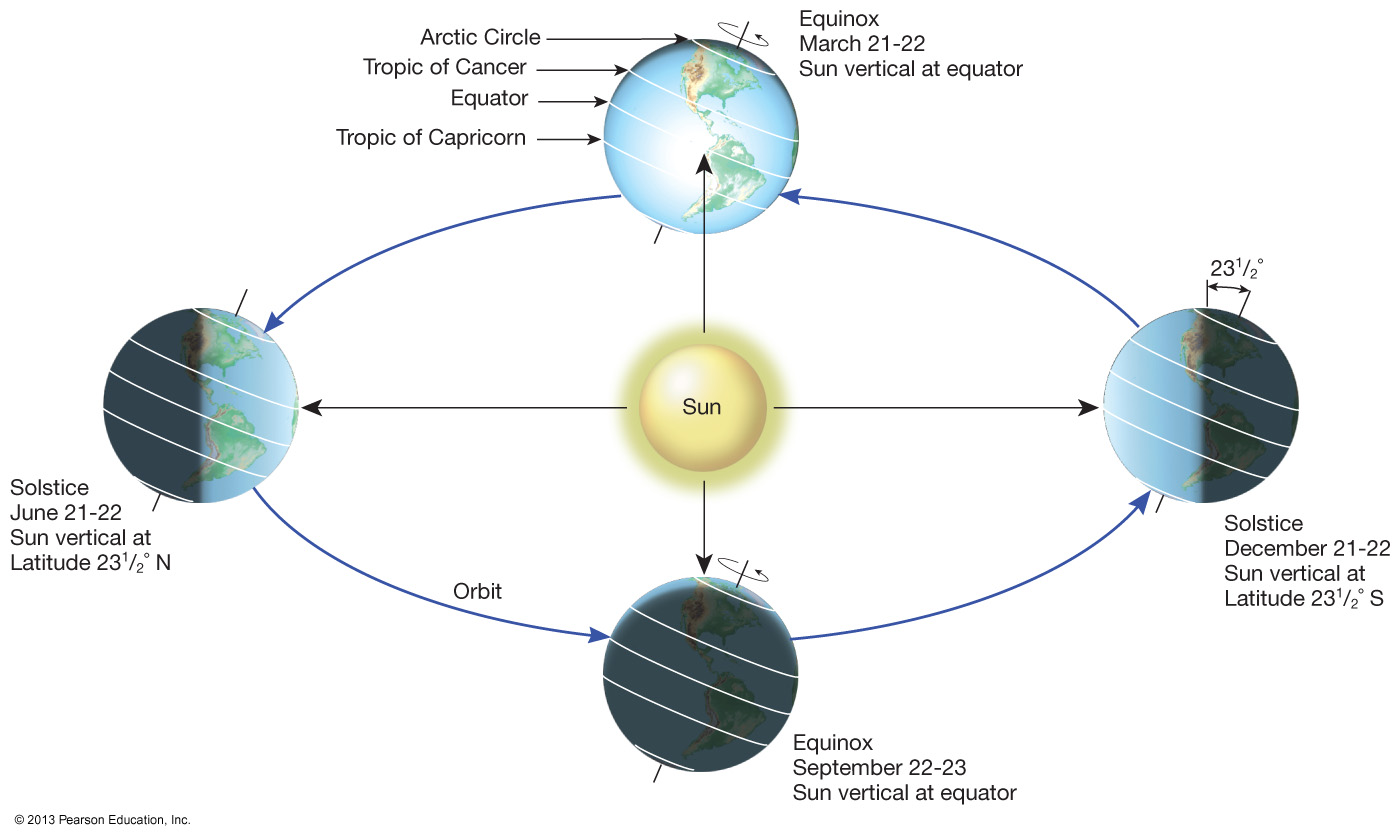
Some insolation strikes the outside of Earths atmosphere perpendicularly like a light pointed directly toward a surface. The hemisphere pointed toward the Sun receives direct sunlight. The Sun is at its lowest point in the sky at noon on December 21 winter solstice and after that time it begins to rise in the sky. The shape of Earths orbital path around the Sun. Direct sunlight is over the Tropic of Capricorn. All locations on Earth regardless of latitude experience 12.
The hemisphere pointed toward the Sun receives direct sunlight.
During the winter solstice the Sun shines most. In the sentence Winter sunlight strikes the earth at an oblique angle what does oblique mean. The equator receives the most direct sunlightbecause sunlight arrives at a perpendicular 90 degree angle to the Earth. Solar radiation strikes the surface. The Earths shape is spherical. This causes the Suns rays to strike the Earths surface at different angles creating variances in temperatures on Earth.
 Source: intl.siyavula.com
All locations on Earth regardless of latitude experience 12. Assume that 5 people are. The shape of Earths orbital path around the Sun. Hemisphere as indicated by the red line. In the mid-latitude regions north or south of the equator insolation strikes the.
 Source: richhoffmanclass.com
Sunlight hits the earth at a low angle as it does for us in the morning and evening. Winter the Sun is lower in the sky or because the Suns rays hit the Earth at a different angle. In different season s the Sun is farther north or south. Solar radiation strikes the surface. At an equinox see Figure EA-S4-1 sunlight strikes the Earth at a 90 angle at the equator.
 Source: ar.pinterest.com
Yes the suns rays do strike at an angle during winterAnswerThe suns rays strike the Earth the same way in all seasons. Earth to the Northern Hemisphere. Longer duration of daylight in summer is another reason for warm summers and cold winters as warming of the body ground and other objects depends on the absorption of the. Winter the Sun is lower in the sky or because the Suns rays hit the Earth at a different angle. At an equinox see Figure EA-S4-1 sunlight strikes the Earth at a 90 angle at the equator.
 Source: quora.com
During the winter solstice sunlight strikes the earth most directly at 235 degrees South the Tropic of Capricorn. Winter occurs from December 21 to March 21. We do not do your homework for you. The tilt of the Earths axis causes the rays of the Sun to strike more directly north of the equator between March 21 and. The probability that a person catches a cold during the cold and flu season is 062.
Source:
The equator receives the most direct sunlightbecause sunlight arrives at a perpendicular 90 degree angle to the Earth. When the suns position is higher in the sky at noon there are more hours of daylight and the sunlight strikes the surface at a more vertical angle. In winters sunlight strikes earth at an obtuse angle that skims the surface. The hemisphere pointed toward the Sun receives direct sunlight. Answersunlight strikes the poles at an oblique angle.
Source: macmillanhighered.com
Directly on the Tropic of Capricorn 235 degrees south of the equator giving its most direct energy on Earth to the Southern Hemisphere. We will be happy to evaluate your work though. Partial Student response states that the length of the. In the sentence Winter sunlight strikes the earth at an oblique angle what does oblique mean. In most places the Sun rises in the morning is highest at noon and sets in the evening.
 Source: pinterest.com
When the suns position is higher in the sky at noon there are more hours of daylight and the sunlight strikes the surface at a more vertical angle. The angle at which the sun strikes Earth is more important than the distance Yes. At a solstice where the Earth is tilted away from or toward the sun sunlight strikes the Earth most directly at one of the tropic. In the mid-latitude regions north or south of the equator insolation strikes the. The probability that a person catches a cold during the cold and flu season is 062.
 Source: pinterest.com
We do not do your homework for you. Longer duration of daylight in summer is another reason for warm summers and cold winters as warming of the body ground and other objects depends on the absorption of the. When the suns position is higher in the sky at noon there are more hours of daylight and the sunlight strikes the surface at a more vertical angle. Partial Student response states that the length of the. In winters sunlight strikes earth at an obtuse angle that skims the surface.
 Source: pinterest.com
The tilt of the Earths axis causes the rays of the Sun to strike more directly north of the equator between March 21 and. Seasonal change in the angle of sunlight caused by the tilt of Earths axis is the basic mechanism that results in. During the summer solstice the North Pole has a 24-hour day and the South Pole has a 24-hour night. The amount of heat energy received at any location on the globe is a direct effect of Sun angle on climate as the angle at which sunlight strikes Earth varies by location time of day and season due to Earths orbit around the Sun and Earths rotation around its tilted axis. The higher the sun appears in the sky the more solar energy reaches the surface.
 Source: pinterest.com
In most places the Sun rises in the morning is highest at noon and sets in the evening. Longer duration of daylight in summer is another reason for warm summers and cold winters as warming of the body ground and other objects depends on the absorption of the. Winter occurs from December 21 to March 21. In the sentence Winter sunlight strikes the earth at an oblique angle what does oblique mean. Sun angle is the angle of incidence at which sunlight strikes the Earth at a particular time and place.
 Source: pinterest.com
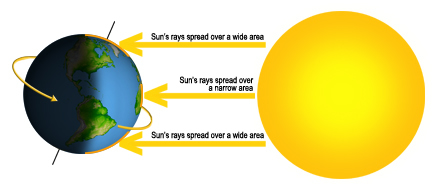
Hemisphere as indicated by the red line. What are your choices. Some insolation strikes the outside of Earths atmosphere perpendicularly like a light pointed directly toward a surface. The amount of heat energy received at any location on the globe is a direct effect of Sun angle on climate as the angle at which sunlight strikes Earth varies by location time of day and season due to Earths orbit around the Sun and Earths rotation around its tilted axis. Direct Sunlight When sunlight strikes Earth at a higher angle closer to 90 degrees.
 Source: lpi.usra.edu
In different season s the Sun is farther north or south. The tilt of the Earths axis causes the rays of the Sun to strike more directly north of the equator between March 21 and. During the summer solstice the North Pole has a 24-hour day and the South Pole has a 24-hour night. Hemisphere than in the S. This causes the Suns rays to strike the Earths surface at different angles creating variances in temperatures on Earth.
 Source: pinterest.com
This means that there is. Sun angle is the angle of incidence at which sunlight strikes the Earth at a particular time and place. In winters sunlight strikes earth at an obtuse angle that skims the surface. During the summer solstice the North Pole has a 24-hour day and the South Pole has a 24-hour night. Winter Solstice Beginning of winter in the northern hemisphere.
 Source: pinterest.com
Solar radiation strikes the surface. Sunlight that strikes Earths surface at an acute angle less than 90 Season One of the major divisions of the year usually based on regular weather changes. Image of the tilt of the earth in the winter When the N. All locations on Earth regardless of latitude experience 12. We will be happy to evaluate your work though.
 Source: pinterest.com
The tilt of the Earths axis causes the rays of the Sun to strike more directly north of the equator between March 21 and. This part of the atmosphere is receiving the maximum insolation possible or an amount of energy equivalent to the solar constant at the top of the atmosphere 1366 Wm2. During the summer solstice not pictured the Northern Hemisphere day lasts more than 12 hours and the Southern Hemisphere day lasts fewer than 12 hours. Why does the angle at which sunlight hits Earth change. During the equinoxes sunlight strikes perpendicular to the surface at Earths equator.
 Source: pinterest.com
Yes the suns rays do strike at an angle during winterAnswerThe suns rays strike the Earth the same way in all seasons. The Earths shape is spherical. The higher the sun appears in the sky the more solar energy reaches the surface. Image of the tilt of the earth in the winter When the N. Why does the angle at which sunlight hits Earth change.
 Source: pinterest.com
Seasonal change in the angle of sunlight caused by the tilt of Earths axis is the basic mechanism that results in. Sunlight hits the earth at a low angle as it does for us in the morning and evening. The probability that a person catches a cold during the cold and flu season is 062. In the sentence Winter sunlight strikes the earth at an oblique angle what does oblique mean. Hemisphere is tilted away from the sun the suns rays strike the earth at a shallower angle compared to a similar latitude in the S.
 Source: pinterest.com
Some insolation strikes the outside of Earths atmosphere perpendicularly like a light pointed directly toward a surface. Winter occurs from December 21 to March 21. The probability that a person catches a cold during the cold and flu season is 062. The equator receives the most direct sunlightbecause sunlight arrives at a perpendicular 90 degree angle to the Earth. Since temperature in humid can be very hot in the summer and very cold in the winter the vegetation in these area is.
This site is an open community for users to share their favorite wallpapers on the internet, all images or pictures in this website are for personal wallpaper use only, it is stricly prohibited to use this wallpaper for commercial purposes, if you are the author and find this image is shared without your permission, please kindly raise a DMCA report to Us.
If you find this site helpful, please support us by sharing this posts to your own social media accounts like Facebook, Instagram and so on or you can also save this blog page with the title during winter sunlight strikes earth at a by using Ctrl + D for devices a laptop with a Windows operating system or Command + D for laptops with an Apple operating system. If you use a smartphone, you can also use the drawer menu of the browser you are using. Whether it’s a Windows, Mac, iOS or Android operating system, you will still be able to bookmark this website.


